✍️ By the WuzhizhouIsland.com Team — ate at every major dining option on the island across two visits — including the good, the slow and the overpriced · 🗓️ Last updated: November 2026 · ⏱️ ~11 min read
Every island restaurant pays the same hidden tax: everything on the menu crossed the water in a ferry crate. On Wuzhizhou that shows up as island-premium pricing and a wide gap between the best and worst meal you can buy in the same afternoon. This guide is the map we wish we’d had on our first visit — where the reliable food actually is, what the seafood tables are really like, how to eat well on snack-bar economics, and how to time meals so the queues never eat your beach day.
🗺️ The Island Dining Landscape in One Paragraph
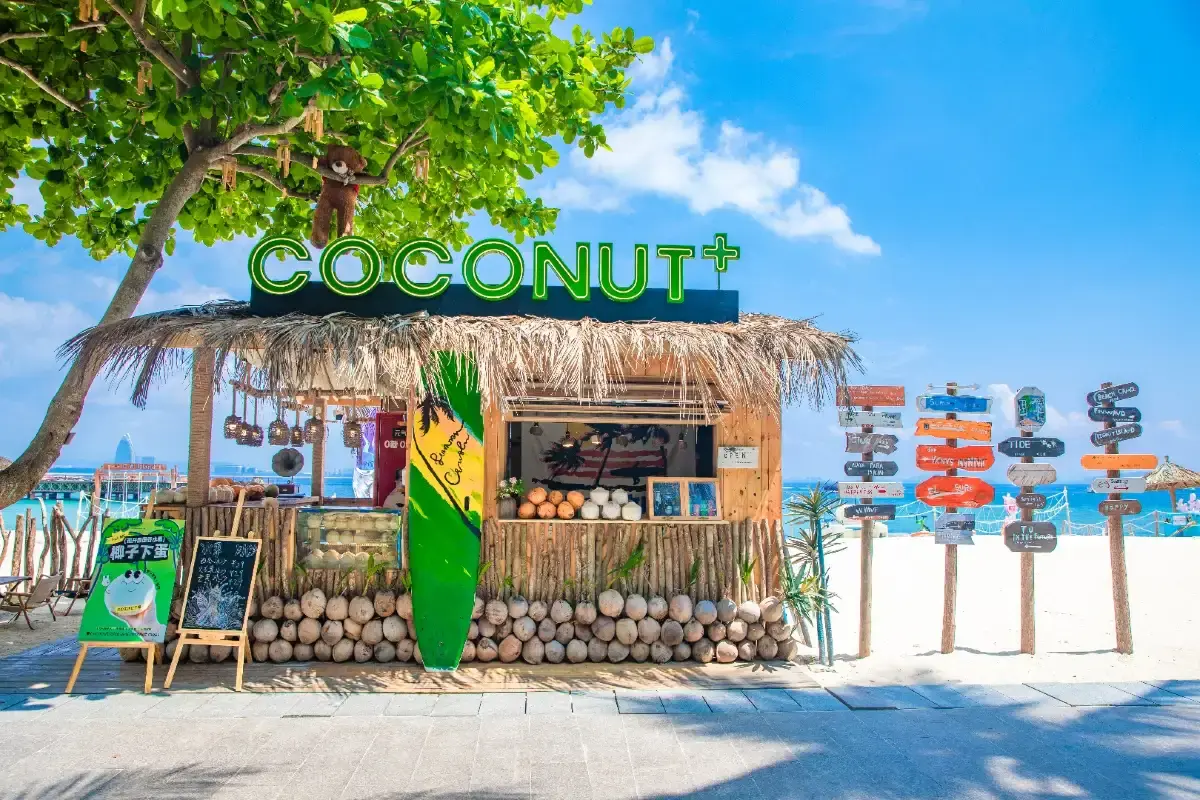
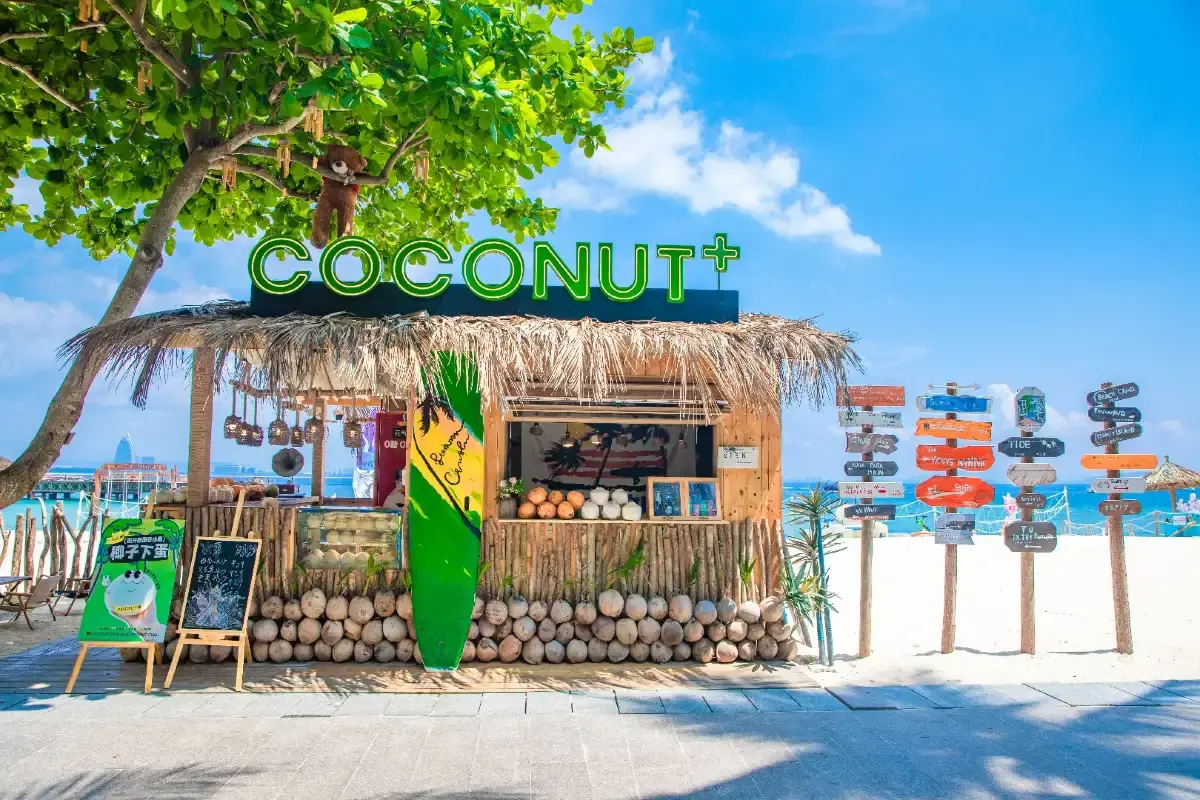
Eating on Wuzhizhou falls into four tiers. There are sit-down restaurants near the main resort and beach zone, serving set meals, noodles, rice dishes and seafood plates. There are snack counters and convenience shelves scattered around the main beach and activity areas — drinks, fruit, packaged snacks, grilled items. There are beach bars and themed stalls, including the photogenic coconut bar that doubles as a photo stop, and finally the resort dining that overnight guests rely on after the day ferries thin out. Quality is uneven; speed is seasonal; prices all carry the ferry tax.
🥥 The Coconut Economics (and Other Drink Math)
The single best-value drink on the island is the fresh coconut — cold, everywhere, photogenic and cheaper than imported coffee drinks. The worst-value purchases are the familiar comfort imports: iced lattes, bottled cocktails and name-brand sodas, where the island premium is steepest. Our rule after two visits: hydrate on water and coconuts, treat yourself to one real coffee if the afternoon demands it, and skip the blended cocktails at beach-bar prices entirely — the same money buys a proper seafood lunch elsewhere.
💡 Buy a cold coconut after your round-island walk, not before: it doubles as shade-and-sugar recovery exactly when the heat peaks, and the stands near the western viewpoints are less crowded than the main-beach counters at midday.
🍜 The Restaurants: What’s Reliable, What’s Slow
The sit-down options split cleanly by goal. If you want speed and predictability, the noodle and rice-dish service near the main beach beats the seafood tables on both counts — you order, you eat, you’re back in the water within 45 minutes. If you want the occasion, the seafood restaurants deliver presentation and variety, but at two costs: a menu that prices by the plate rather than by the set, and service that slows dramatically between 12:00 and 13:30 when every tour group eats at once. Both are honest options; they just solve different problems.
One note that saves disappointment: island seafood is a convenience, not a fishing port. Hainan’s serious seafood scene lives on the mainland — night markets and harbour-town kitchens in and around Sanya and Haitang Bay, where catch lands daily and prices compete. On the island you’re paying for the setting (and it is a lovely setting); on the mainland you’re paying mostly for the fish. Day-trippers with seafood ambitions should plan that meal for the evening, back on dry land.
🥪 The Snack Strategy: How Light Eaters Win
Half the island’s lunch queues exist because visitors skip breakfast and arrive hungry at 12:00. The counter-strategy: eat a real breakfast before boarding, carry pocket snacks (the convenience shelves cover forgotten cases), and make your main island meal either early — before 11:45 — or late, after 13:30. The middle of the lunch window belongs to tour groups with fixed schedules; the edges belong to you. This timing trick is built into our 🗓️ hour-by-hour itinerary, and it is the difference between a 40-minute lunch and a 90-minute lunch line.
📸 Dining as a Photo Stop
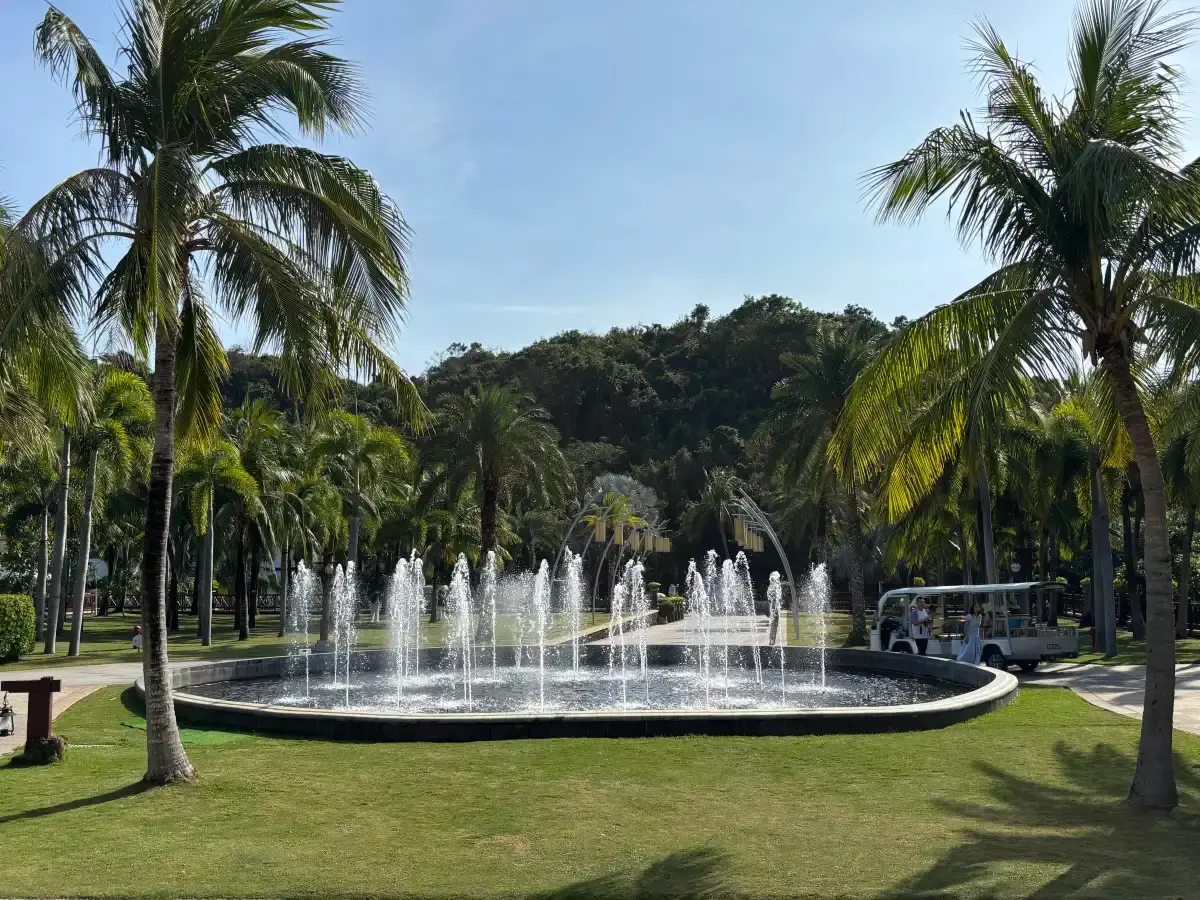
Several dining spots double as the island’s most photogenic corners — the coconut bar, the palm-shaded pavilions, the plaza fountains near the central walkways. If your visit doubles as a content trip, sequence lunch and the photo loop together: the golden-hour shots on the western viewpoints pair naturally with a late-afternoon drink stop. The full shot list, including angles and drone rules, is in 📸 Photographing Wuzhizhou Island.
🌅 Eating Before and After: the Haitang Bay Playbook
The smartest meal plan bookends the island. Before boarding: Haitang Bay is the closest mainland base — hotel breakfasts, bakery counters and quick mall food all beat arriving hungry at the pier. After the return ferry: this is where the seafood ambition gets satisfied — the bay’s restaurant strip and night-market options trade island views for portion sizes and prices that make sense. Where to base yourself for these bookend meals is mapped in 🏨 Where to Stay for Wuzhizhou Island: Haitang Bay vs Yalong Bay vs Downtown.
📌 For overnight guests the calculus changes: dinner happens on the island, full stop. Resort dining and the evening beach options carry premium prices but genuine atmosphere — and the alternative (a mainland dinner) means surrendering the empty-island evening, which is the whole point of staying. Our 🌙 overnight guide covers the trade-offs.
⚠️ Practical Realities: Allergies, Water and Dietary Needs
Four practical notes. Vegetarian travellers: noodle and rice counters handle meat-free requests far better than the seafood tables — order explicitly and early. Allergies: carry translation cards; peanut and shellfish are common in Hainan cooking. Drinking water: bottled water is sold everywhere on the island at reasonable premium — no need to carry litres from the mainland. And spice levels: Hainan cuisine is milder than Sichuan-style food, but the condiment caddy is honest — taste before you commit.
🧾 What a Day of Eating Actually Costs
Marked as estimates, since menus move seasonally: a snack-tier day (breakfast before boarding, coconut, one noodle bowl, bottled water) lands in the modest double-digit-yuan-plus range; a mid-range day with a proper set lunch and a coffee roughly doubles that; the seafood-occasion day climbs to celebration prices. The context for those numbers inside the full day budget — tickets, activities, transport — is in 💰 our budget breakdown. The fixed anchor that never changes: the entry-and-ferry ticket, from about US$20.98 on Trip.com.
🧊 Freshness and Food Safety on a Small Island
Everything you eat crossed the water in a crate, so freshness is a logistics question — and the busiest counters are the safest bet, because stock turns over fastest where queues are longest. Grilled-to-order items beat pre-cooked trays; hot noodle bowls beat anything sitting under lamps; and the seafood display, while scenic, deserves the same scepticism you’d apply to any tourist-zone catch tank. When in doubt, order what the counter is actively cooking rather than what’s already plated.
The standard tropical hygiene rules apply double at the beach: hand gel before eating (the wash basins cluster around the restaurants, not the snack counters), bottled or refilled water over tap, and a hard look at any cold dessert that has been sitting in island heat. None of this is alarmism — the island feeds tens of thousands of visitors a season competently — it’s just the normal physics of eating well in a hot place with one supply line.
🥤 Late-Afternoon Bites Before the Last Ferry
The 15:30–17:30 window is the island’s snacking sweet spot and its hungriest hour: the lunch crowd has metabolised, the sun has earned a reward, and the evening ferries are still an hour off. The counters that serve it well are the cold-drink and ice-cream stops near the main beach, the coconut stands (still the best value on the island), and the convenience shelves for the picnic-on-the-pier crowd.
Our tested pattern: one cold coconut at the western viewpoints after the photo loop, one shared snack at the main beach before walking to the pier, and the real meal saved for the mainland — the bookend strategy from the Haitang Bay section above. Eating a full hot meal at 16:30 and then boarding a moving boat is a choice you’ll regret roughly halfway across the bay.
❓ Frequently Asked Questions
Are there restaurants on Wuzhizhou Island?
Yes — the island has sit-down restaurants near the main beach and resort zone, plus snack counters, convenience shelves and beach bars. Options cover noodle and rice dishes, set meals and seafood plates, all at island-premium prices.
Is the seafood on Wuzhizhou Island good?
It is a pleasant, scenic option, but it is not Hainan’s best seafood or its best value — the island premium is real. Serious seafood fans do better at Haitang Bay or Sanya mainland restaurants and night markets after the return ferry.
How much does lunch cost on Wuzhizhou Island?
As an estimate: snack-counter meals are the budget tier, restaurant set meals sit in the middle, and seafood tables are the top end. Prices shift seasonally — the safest plan is the snack strategy (real breakfast before boarding, coconut for drink, one main meal at off-peak hours).
Can you drink alcohol on the island?
Beach bars and restaurants sell beer and cocktails during opening hours. Pace yourself with the sun and the sea — the island operates swimming zones under daily safety rules, and activity operators refuse obviously intoxicated guests.
What should vegetarians eat on Wuzhizhou Island?
The noodle and rice-dish counters handle vegetarian requests better than the seafood restaurants. Order explicitly (mention no meat and no fish sauce if relevant), eat at off-peak hours, and supplement with fruit and coconuts.