✍️ By the WuzhizhouIsland.com Team — visited across four different seasons and tracked sea state, crowds and prices each time · 🗓️ Last updated: November 2026 · ⏱️ ~12 min read
Wuzhizhou Island is a year-round destination with a strongly seasonal personality. The same lagoon that glitters in March can churn under a typhoon swell in September; the beach that feels private on a November weekday disappears under umbrellas on the first day of Golden Week. Choosing when to go is less about temperature — Sanya never really gets cold — and more about three overlapping curves: sea conditions, crowd volume and price. This guide maps all three, month by month, and then gives a verdict for four different travel styles.
🌡️ The Climate Baseline: Sanya’s Two Seasons
Sanya runs on a simple toggle. The dry season, roughly November through April, brings lower humidity, gentler seas, the clearest water of the year and the bulk of the tourism. The wet season, roughly May through October, brings heat, higher humidity, afternoon downpours, warmer sea — and the tail of the Northwest Pacific typhoon season, whose peak threat window for Hainan runs from late summer into autumn. Neither season is “wrong”: they optimize for different priorities, which is exactly what the month map below is for.
📌 Island access is maritime and weather-dependent: the operator’s own entry policy notes that in severe weather — typhoons and storms included — sailings are suspended and the island becomes temporarily inaccessible, with visitors assisted off early. Check the sailing status the evening before and the morning of any wet-season visit; a cancelled ferry is the only truly bad Wuzhizhou outcome.
📅 Month by Month: What Each One Is Actually Like
| 🗓️ Month | 🌊 Sea & weather | 👥 Crowds & price pressure | 🎯 Verdict |
|---|---|---|---|
| January–February | Dry, calm, coolest water of the year; air is spring-like | Peak domestic travel around Spring Festival — book everything early | Beautiful but busy; avoid the holiday week itself |
| March–April | Excellent visibility, warming air and water, stable seas | Shoulder of the winter peak; weekdays still quiet | ★ Best overall window for most travellers |
| May–June | Hot, humid, warming sea; first big storms possible | Thinning crowds before summer holidays; prices soften | Good value; plan water time for mornings |
| July–August | Hottest; strong sun, afternoon storms, occasional swell | Family summer peak; domestic crowds spike | Fine for beach-first trips; start early |
| September–October | Peak typhoon exposure; hot with volatile sea state | Crowds dip between holidays — but sailing risk is real | For flexible travellers only; watch forecasts |
| November–December | Dry season returns; clear water, gentle light | Post-holiday calm, then pre-holiday buildup in December | ★ Runner-up window; superb light for photos |
🏆 The Verdict for Four Travel Styles
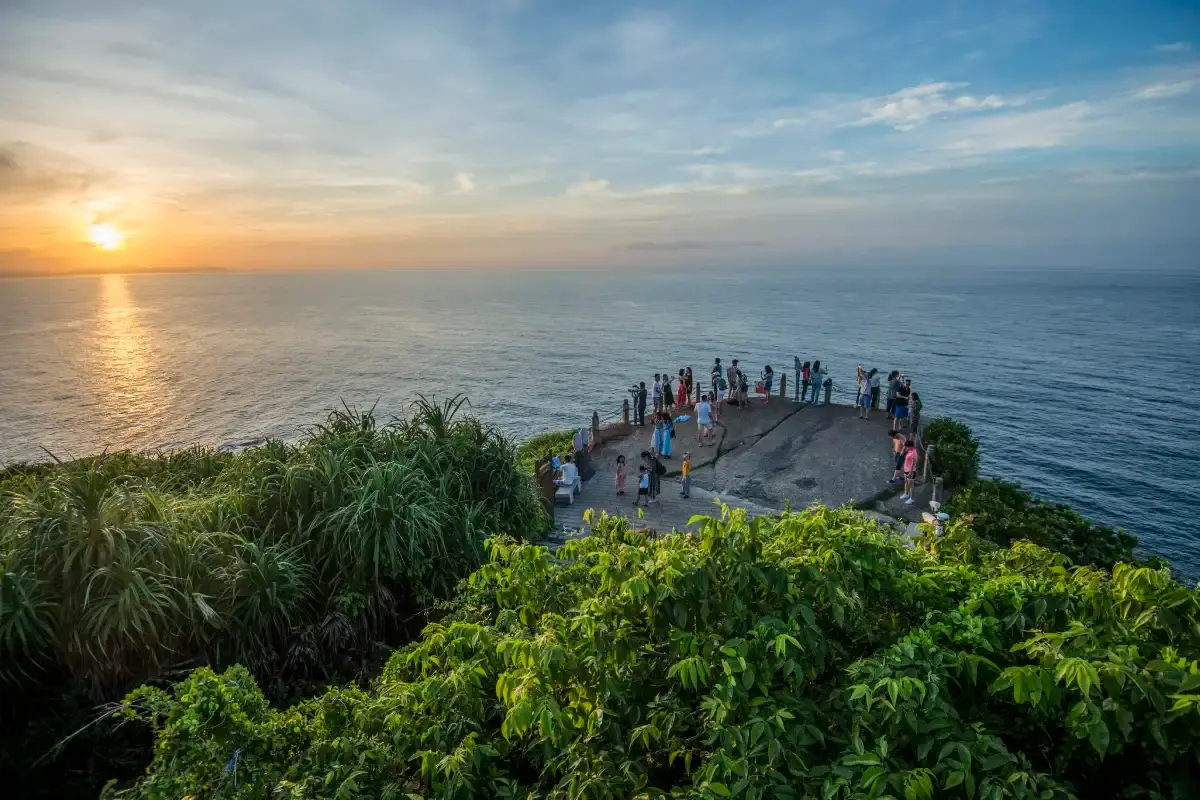
📸 Photographers and honeymooners: March–April and November–December. Low sun, clear water and shoulder-season crowds make both windows deliver the empty-beach shots. The aerial heart-shaped silhouette of the island — its signature image — shows best when visibility is highest. Pair the timing with our shot list: 📸 Photographing Wuzhizhou Island.
👨👩👧 Families: the dry-season school-holiday windows are the obvious choice but also the most crowded; if your calendar is locked to them, build the day around our family guide and go at opening. If you can travel in May or early June, you get warm-enough water with a fraction of the queue lines.
🤿 Divers and snorkellers: visibility is king, so dry season wins — the island’s four named sites (Qilin Sea, Back Garden, Glass Fish Planet and Little Universe) reward calm seas with the fish-tornado and coral shows they’re known for. Conditions at each site, and what to expect underwater, are covered in the snorkelling guide et the scuba guide.
💸 Budget travellers: May–June and September–October (outside holidays) combine the year’s softest prices with fewer crowds — the trade-off is weather risk. Our budget breakdown shows how much the calendar alone can move a day’s cost.
🏮 The Holiday Calendar You Must Not Ignore
Two periods reliably transform the island from busy to saturated: Chinese New Year (late January or mid-February) and the October Golden Week around National Day. Summer weekends and the August school holidays run a close third. If your trip overlaps any of these, book tickets, transport and any island accommodation weeks ahead, arrive at the 08:30 opening, and treat our hour-by-hour itinerary as mandatory rather than optional.
⛅ The Day-of Decision: Reading the Sky Before You Commit
Season picked, one micro-skill remains: deciding whether a specific morning is ferry-worthy. Three signals matter. Wave state at the pier — whitecaps beyond the breakwater mean a bumpy crossing. The operator’s notices — daily sailing and swimming-zone announcements reflect actual conditions, since beach swimming hours depend on daily weather and sea conditions. And the forecast radar — in wet season, the afternoon thunderstorm pattern argues for early arrivals and early departures. When in doubt, the morning side of any wet-season day is the safer bet.
🧴 Season-Specific Packing Notes
Dry season: the sun is strong even when the air is mild — high-SPF reef-safe sunscreen, sunglasses and a hat do more work than any jacket. Wet season: quick-dry everything, a packable rain shell, waterproof phone pouch for the ferry, and more water than you think; heat and humidity are the real hazard, as our 🧴 island survival kit guide details. Both seasons: reef-safe sunscreen is non-negotiable on a coral island — the marine ranch’s replanted coral fragments are the reason the snorkelling is good, and sunscreen chemistry is part of protecting them.
🌅 One Last Timing Trick: the Hour, Not Just the Month
Whatever month you pick, the island’s internal clock matters as much as the calendar: opening is 08:30 and final admission is 16:00. Early ferries get calm water and empty viewpoints; late-afternoon hours get golden light and thinning crowds. The perfect visit is a shoulder-season weekday with a first-ferry arrival — but even in peak months, arriving at opening buys you three quiet hours before the tour buses unload. Time beats luck, every trip.
🌧️ Rainy-Day Rules: What Actually Closes
Wet-season rain rarely closes the island — it reshapes it. What flexes: the beach swimming zone (hours depend on daily weather and sea conditions, announced on-site), water-sport sessions (wind and swell pause the towables and parasails first), and in genuinely severe weather the sailings themselves, which is the only full-stop outcome. What stays open: the round-island road’s covered sections, the dining counters, the visitor facilities near the main beach, and — the underrated wet-day move — the semi-submarine, which shows the reef regardless of what the sky is doing.
The tactical response to an afternoon storm forecast: flip the day. First ferry over, beach and swim in the morning window, activities before lunch, and the ferry back before the sky organises itself. The hour-by-hour itinerary already runs on this logic; in wet season it becomes mandatory rather than optional.
📊 Crowds by the Clock vs Crowds by the Calendar
Two different crowd curves decide your experience, and they’re independent. The daily curve is fixed: opening at 08:30 starts the quiet hours, tour-group waves peak the island from late morning through mid-afternoon, and the volume drops again toward evening — final admission at 16:00 means the late-day crowd is strictly the early arrivals. The calendar curve is seasonal: holiday weeks saturate everything, weekends inflate it, and weekdays in shoulder months nearly empty it.
The practical use of this: if your dates are locked into a busy calendar stretch, fight the calendar with the clock — a first-ferry arrival on a holiday Saturday sees less crowding than a noon arrival on a quiet Tuesday. And if your dates are flexible, the calendar wins you more than any tactic: prices follow the same curve as the crowds.
🌤️ Reading the Shoulder Months: Spring and Autumn Transitions
March–April and November deserve a closer look than the table gives them, because they are transition months with transition personalities. Spring slides from the winter peak into rising heat: seas calm, visibility excellent, crowds thinning week by week — and the odd early-season storm reminds you the wet season is coming. Autumn runs the reverse: September and October carry real typhoon exposure, then November flips the switch to dry-season stability almost overnight.
The shoulder-month playbook: book refundable everything (tickets, rooms, transfers), watch the seven-day forecast rather than the seasonal averages, and treat any storm system in the window as a free reschedule excuse. Visitors who accept that small gamble get the year’s best combination: clear water, gentle light and a island that feels half-empty.
💡 Price windows follow the weather windows. Once the month is settled, lock in your Wuzhizhou Island entry-and-ferry ticket on Trip.com — shoulder-season dates reward whoever books early, and holiday-week pricing punishes whoever waits.
❓ Frequently Asked Questions
Quel est le meilleur mois pour visiter l'île de Wuzhizhou
Mars-avril est la fenêtre globale la plus importante : clarté de la saison sèche et mer calme avec des foules en basse saison. Novembre-décembre arrive en deuxième position avec une excellente lumière et une demande plus douce. Les deux se situent en dehors des principales périodes de vacances chinoises.
Quelle est la saison des typhons à Sanya et comment affecte-t-elle l'île
Hainan’s main typhoon exposure runs through the wet season, with peak risk in late summer and early autumn (August–October). Ferries are weather-dependent: in severe weather the operator suspends sailings and the island becomes temporarily inaccessible, so wet-season trips should keep schedule flexibility and monitor notices.
L'île de Wuzhizhou vaut-elle la peine d'être visitée en hiver
Yes — winter is the dry season, with mild air, calm seas and the year’s clearest water. It is also peak domestic tourism, so expect crowds and peak pricing around the Spring Festival period and book everything in advance.
Quels mois sont les moins chers pour l'île de Wuzhizhou
Les mois de mai à juin et de septembre à octobre, en dehors des périodes de vacances, connaissent généralement les prix les plus bas et les foules moins nombreuses, avec un risque météorologique plus élevé. Le billet lui-même commence à environ 20,98 $ US sur Trip.com, et les prix des activités et des chambres baissent également dans ces fenêtres.
À quelle heure dois-je arriver pour éviter la foule
The island opens at 08:30 and final admission is 16:00. The first ferry window is the quietest of the day; by mid-morning tour groups dominate, and the island empties again after 17:00. Arriving at opening buys the calmest water and shortest queues regardless of season.